Nepal Trekking Permits: Everything You Need to Know Before Your Trek
Last Updated: July 2026
Permit regulations may change. Contact The Majestic Adventure for the latest information
Dreaming of trekking to Everest Base Camp, the Annapurna Circuit, or the hidden valleys of Upper Mustang? Before you lace up your boots, there’s one important thing you need to take care of—your trekking permits. Whether you’re planning a short Himalayan hike or a multi-week expedition, having the correct permits is essential for a smooth and hassle-free adventure in Nepal.
This guide explains everything you need to know about Nepal trekking permits, including the different types of permits, costs, where to obtain them, and why they are essential for a safe and responsible trekking experience.
Why Are Trekking Permits Required in Nepal?
Trekking permits are mandatory for most trekking regions in Nepal. They help the government regulate tourism, ensure trekkers’ safety, protect natural environments, and support local communities through conservation and infrastructure development.
The funds collected from permit fees contribute to:
- Conservation of national parks and protected areas
- Trail maintenance and infrastructure
- Wildlife protection
- Local community development
- Emergency rescue coordination
- Tourism management
Carrying valid permits also ensures that you comply with Nepal’s trekking regulations and avoids unnecessary fines or delays during your trek.
Types of Trekking Permits in Nepal
Depending on your trekking destination, you may need one or more of the following permits.
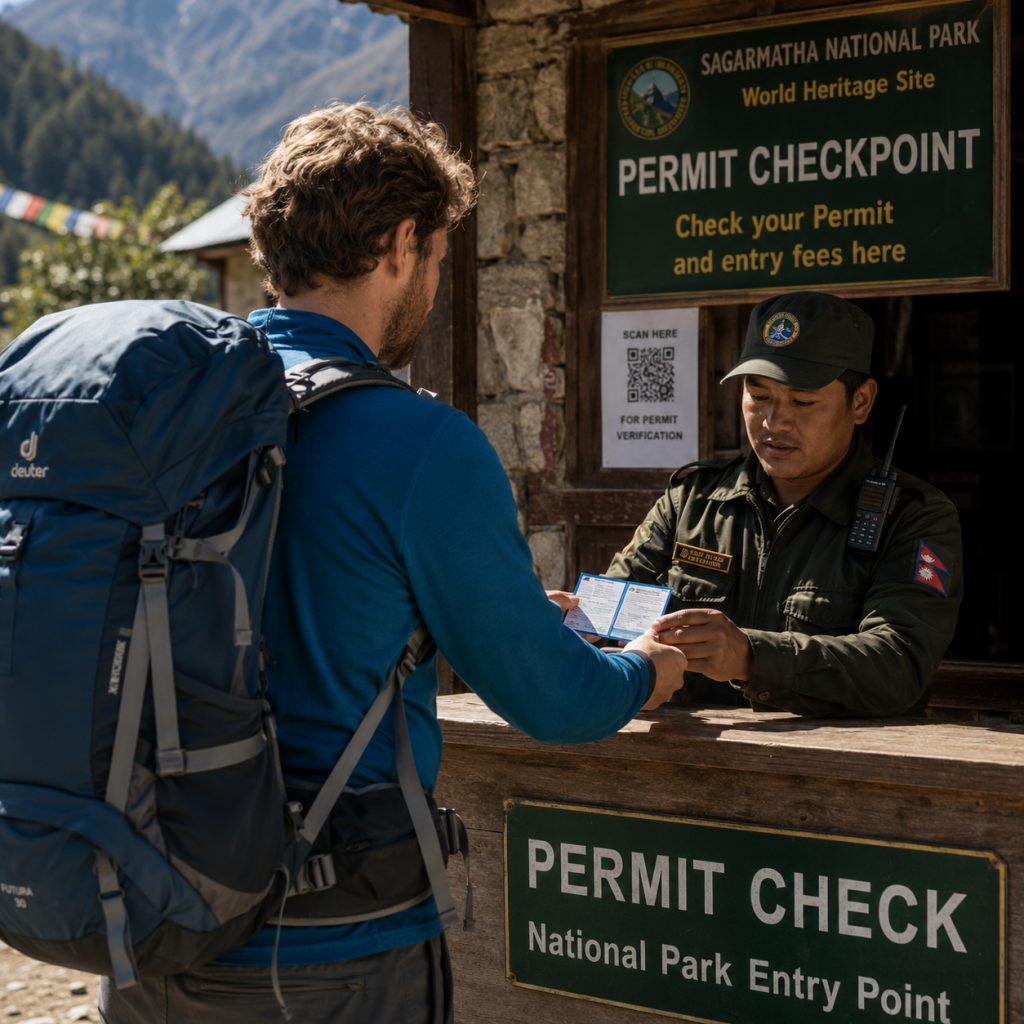
1. TIMS Card (Trekkers’ Information Management System)
The TIMS Card is designed to record trekkers entering various trekking regions and helps authorities locate trekkers during emergencies.
Benefits include:
- Improved trekker safety
- Better emergency response
- Trekking statistics and tourism management

2. National Park and Conservation Area Entry Permits
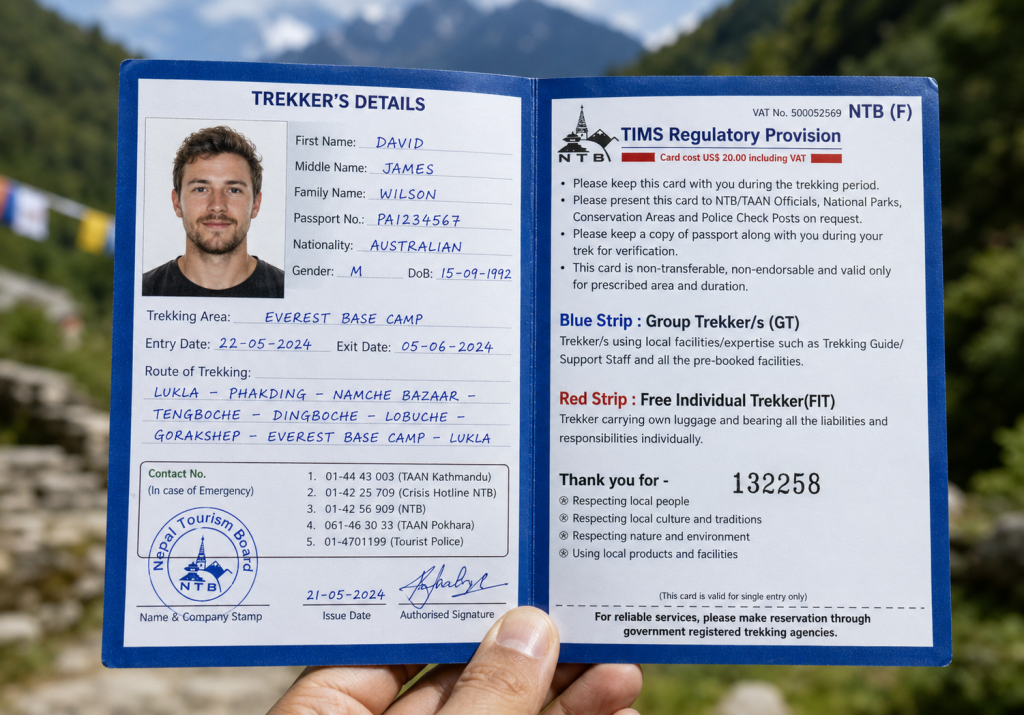
Many of Nepal’s famous trekking routes pass through protected national parks and conservation areas.
Common permits include:
- Sagarmatha National Park Permit (Everest Region)
- Annapurna Conservation Area Permit (ACAP)
- Langtang National Park Permit
- Makalu Barun National Park Permit
- Shivapuri National Park Permit
- Kanchenjunga Conservation Area Permit
Each protected area has its own entry fee and regulations.
3. Restricted Area Permits (RAP)
Certain regions of Nepal are classified as restricted due to their remote locations and proximity to international borders.
Restricted areas include:
- Upper Mustang
- Upper Dolpo
- Manaslu Region
- Nar Phu Valley
- Kanchenjunga Restricted Sections
- Tsum Valley
These permits generally require:
- Booking through a registered trekking agency
- A licensed trekking guide
- A minimum group size (depending on the region)
- Special government approval
Restricted Area Permits are significantly more expensive than standard permits but allow access to some of Nepal’s most untouched landscapes.
Trekking Permits for Popular Trekking Routes
Everest Base Camp Trek
Required permits:
- Khumbu Pasang Lhamu Rural Municipality Permit
- Sagarmatha National Park Entry Permit
Annapurna Base Camp Trek
Required permits:
- Annapurna Conservation Area Permit (ACAP)
Annapurna Circuit Trek
Required permits:
- Annapurna Conservation Area Permit (ACAP)
Langtang Valley Trek
Required permits:
- Langtang National Park Entry Permit
Manaslu Circuit Trek
Required permits:
- Restricted Area Permit
- Manaslu Conservation Area Permit (MCAP)
- Annapurna Conservation Area Permit (ACAP)
Upper Mustang Trek
Required permits:
- Restricted Area Permit
- Annapurna Conservation Area Permit (ACAP)
How to Obtain Trekking Permits in Nepal
There are several ways to obtain trekking permits in Nepal, depending on the region you plan to visit.
1. Apply Through a Registered Trekking Company (Recommended)
The easiest and most hassle-free option is to book your trek with a licensed trekking company like The Majestic Adventure. We handle the entire permit process on your behalf, ensuring all required documents are submitted correctly and on time.
When you book with us, we take care of:
- All trekking permit applications
- TIMS Card processing (where applicable)
- National Park and Conservation Area entry permits
- Restricted Area Permit (RAP) applications
- Government approvals and required documentation
- Permit collection before your trek begins
This saves you time, eliminates unnecessary paperwork, and ensures you comply with the latest trekking regulations.
2. Apply Through Official Government Offices
If you prefer to arrange your permits independently, you can apply through the official government agencies:
- Nepal Tourism Board (NTB) – Information on trekking permits, conservation area permits, and trekking regulations: Nepal Tourism Board – Trekking Permits
- Department of Immigration, Nepal – Official authority for Restricted Area Permits (RAP): Department of Immigration, Nepal
- Nepal Tourism Board (Trade Portal) – Registered trekking agencies can process TIMS Cards online through the official portal: NTB TIMS Online Services
Please note that Restricted Area Permits cannot generally be obtained directly by foreign trekkers and must be processed through a government-registered trekking agency. Current permit requirements and procedures are published by the Nepal Tourism Board and the Department of Immigration.
Documents Required
To apply for trekking permits, you typically need:
- Valid passport
- Nepal visa
- Passport-sized photographs (if required)
- Trekking itinerary
- Travel insurance information (recommended)
If you book with a trekking company, they usually handle the paperwork for you.
Permit Costs
Permit fees vary depending on the trekking region, season, and nationality. The table below provides a general overview of permit costs for some of Nepal’s most popular trekking destinations.
| Trekking Route | Required Permit(s) | Approximate Cost (USD) |
|---|---|---|
| Everest Base Camp | Khumbu Pasang Lhamu Rural Municipality Permit + Sagarmatha National Park Permit | ~USD 35–40 |
| Annapurna Base Camp | Annapurna Conservation Area Permit (ACAP) | ~USD 22 |
| Annapurna Circuit | Annapurna Conservation Area Permit (ACAP) | ~USD 22 |
| Langtang Valley | Langtang National Park Entry Permit | ~USD 22 |
| Manaslu Circuit | Restricted Area Permit (RAP) + MCAP + ACAP | From USD 120+ (varies by season and trek duration) |
| Upper Mustang | Restricted Area Permit (RAP) + ACAP | USD 500 (first 10 days) + ACAP |
| Upper Dolpo | Restricted Area Permit (RAP) | USD 500 (first 10 days) |
For the most up-to-date trekking permit regulations and fees, visit the official government websites:
- Nepal Tourism Board – Trekking Permit Information
- Department of Immigration, Nepal – Trekking Route & Permit Fees
Important Trekking Regulations
Before heading into the mountains, remember these important guidelines:
- Always carry your original permits.
- Keep your passport or a copy with you.
- Respect local customs and protected areas.
- Stay on designated trekking trails.
- Avoid littering and follow Leave No Trace principles.
- Hire licensed guides where required or recommended.
Following these rules ensures a safer and more enjoyable trekking experience while helping preserve Nepal’s natural beauty.
Why Book with The Majestic Adventure?
Planning a trek in Nepal involves more than choosing a destination. From obtaining the correct permits to arranging transportation, accommodations, guides, and logistics, there are many details that need careful attention. At The Majestic Adventure, we take care of every step so you can focus on enjoying your Himalayan journey.
When you book with us, we handle:
- All required trekking permit applications and documentation
- Government approvals for restricted area treks
- Experienced, licensed trekking guides and reliable porters
- Airport pick-up and drop-off services
- Accommodation and transportation throughout your trip
- Customized itineraries tailored to your schedule and fitness level
- Up-to-date information on trekking regulations and permit requirements
- 24/7 local support and assistance during your adventure
Ready to Trek in Nepal?
Leave the paperwork to us. From securing trekking permits to arranging expert guides, accommodations, and transportation, The Majestic Adventure takes care of everything—so you can focus on enjoying the Himalayas.
Contact us today and start planning your unforgettable Nepal trekking adventure.